


You use PN Rating to pick a valve for your system. This rating helps you find the right pressure and temperature. It makes your system safer. If you pick the wrong rating, leaks can happen. Flanges might break. The whole system could stop working. Material type and standards also change how long your valve works. They affect how well it does its job. Knowing these things helps you choose better. It also keeps your equipment safe.

핵심 요약
- PN Rating helps you pick the right valve for your system. It matches the pressure and temperature your system needs. Always look at the temperature and material of the valve. This makes sure the valve can handle your system’s conditions. Pick a valve with a PN Rating higher than your system’s top pressure. This gives extra safety. Think about the type of fluid in your system. Some fluids are corrosive or abrasive. These need special valve materials. Use a checklist to help you choose the valve. This keeps your system safe and working well.
PN Rating Basics
What Is PN Rating?
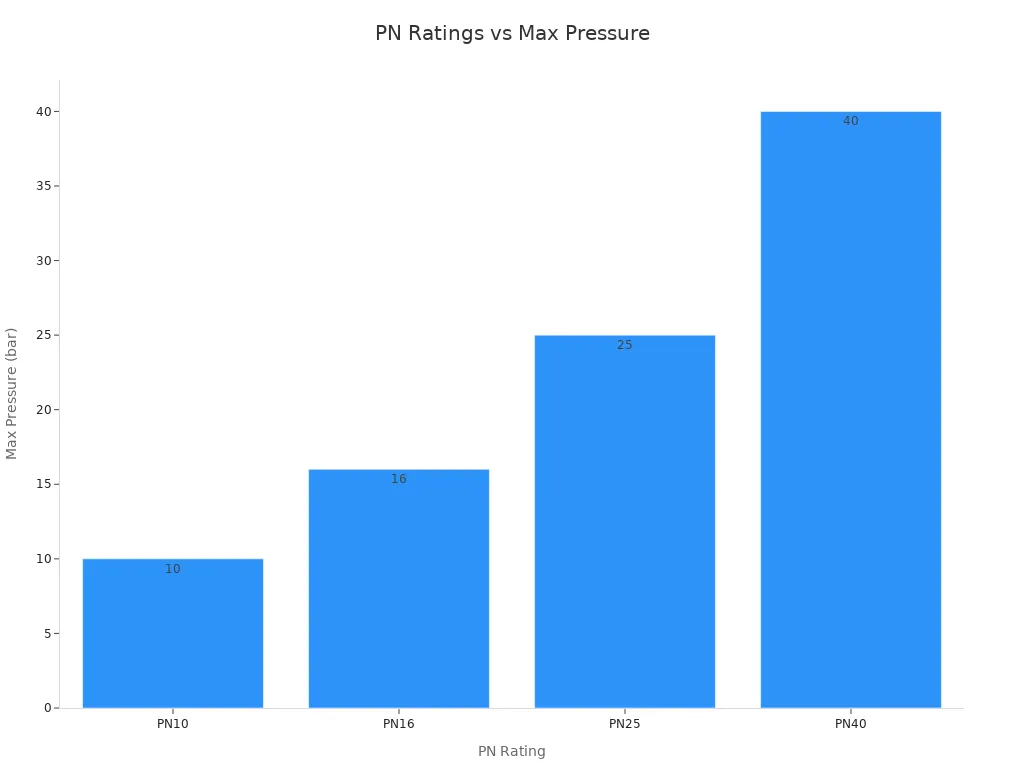
You use PN Rating to know how much pressure a valve can handle. PN stands for “Nominal Pressure.” This system helps you match the right valve to your system’s needs. For example, a PN250 valve works at 250 bar, which is about 3,625 psi. Many countries in Europe use this system. International standards like ISO and EN also use PN Rating to show the maximum pressure for each valve. Here is a quick look at some common ratings:
| PN 등급 | Max Pressure (bar) | Approx PSI |
|---|---|---|
| PN10 | 10 bar | 145 psi |
| PN16 | 16 bar | 232 psi |
| PN25 | 25 bar | 362 psi |
| PN40 | 40 bar | 580 psi |
You often see PN10, PN16, and PN25 in 물 공급 시스템 and air systems. Higher ratings like PN40 work in power plants and heavy industry.
Temperature & Material Factors
You must think about temperature and material when you pick a valve. High temperatures lower the pressure a valve can handle. If you use a valve in a hot system, you need to check the PN Rating at that temperature. The material also matters. Valves made from carbon steel, stainless steel, or alloy steel have different pressure limits. You should always check the material and temperature chart before you choose. Learn more about 밸브 재질.
팁: Always check both the temperature and the material before you decide on a valve. This keeps your system safe.
PN Rating vs. Other Pressure Standards

You may see other pressure standards, like ANSI or Class ratings, in the United States. These systems use different numbers, but you can compare them. Here is a table to help you see the difference:
| PN 등급 | Corresponding Class Rating |
|---|---|
| PN 2.5 | Class 150 |
| PN 6 | Class 150 |
| PN 100 | Class 1500 |
| PN 250 | Class 2500 |
Both systems lower the pressure limit when the temperature goes up. The material also changes the pressure limit. European and American standards use different safety margins, so you must check the details for your project. See our flange rating guide.
Valve Suitability Factors
Pressure & Temperature Limits
You must match the valve’s PN 등급 to your system’s highest pressure and temperature. If your system always has the same pressure, you can use a regular valve. If the pressure or temperature changes a lot, pick a valve with a higher PN 등급. This makes the valve last longer. It also keeps your system safe.
팁: Pick a valve with a pressure rating higher than your system’s top pressure. This gives you a safety margin. It helps protect against sudden pressure jumps.
Temperature changes how much pressure a valve can take. High heat can make valve materials weaker. You should look at the manufacturer’s chart for pressure limits at different temperatures. If your system is hot, make sure the valve’s PN 등급 works for those conditions. Check how temperature affects valve pressure.
Fluid Type & System Dynamics
The fluid in your system affects what valve you need. Water, air, and steam are common fluids. Some systems use fluids that can eat away or scratch valves, like acids or slurries. These fluids can hurt valves if you do not pick the right material.
- Corrosive fluids, like carbon dioxide or hydrogen sulfide, can damage steel valves. You may need valves made from stainless steel, titanium, or Hastelloy for these fluids.
- Grade 316 stainless steel works well in very corrosive places. Grade 304 is good for less harsh fluids.
- PVC and CPVC valves do not rust but cannot take high heat.
- Soft-seated valves with elastomeric materials can seal better in corrosive places.
If your system has fast-moving fluids or changes direction a lot, you need a valve that can handle these forces. Abrasive fluids can wear out valve surfaces. You should pick valves with special coatings or harder materials.
메모: Always check the fluid type before you pick a valve. The wrong material can cause leaks or make the valve break early.
Safety Margins & Environmental Impact
You should always add a safety margin when you choose a valve. Pick a PN 등급 higher than your system’s normal pressure. This helps the valve handle surprise pressure spikes and temperature changes.
- Pick a valve with a pressure rating above your system’s top pressure.
- Think about temperature changes and possible pressure jumps.
- A safety margin keeps your system working well and lowers the chance of failure.
Where your system is matters too. If your system is high up, the pressure can change. Cold weather can make materials break easier. Hot weather can make valve materials weaker. You should think about these things when you pick a valve.
Cost is important too. You might want to save money by picking a cheaper material. For simple systems, this can work. For tough jobs, you should buy stronger materials. Spending more now can stop big repairs later.
| 요인 | What to Check | Why It Matters |
|---|---|---|
| Pressure & Temperature | System’s max pressure and temperature | Stops leaks and failures |
| 유체 유형 | Corrosive or abrasive media | Keeps valve from getting hurt |
| Safety Margin | PN 등급 above system needs | Handles spikes and surges |
| Environment | Elevation, climate, surroundings | Makes sure system lasts longer |
| 비용 | Material vs. system demands | Balances budget and safety |
Callout: Always look at your system’s needs and where it is before you pick a valve. This helps you choose the right PN 등급 and keeps your system safe.
Risks & PN Rating Protection
Overpressure & Pressure Surges
Your system can have problems if pressure rises fast. Quick changes, like shutting a valve or starting a pump, can make pressure surges. These surges are called water hammer. They put extra force on pipes and valves. High pressure can bend or break pipes. Low pressure can make pipes leak or even collapse. Cavitation happens when pressure drops too low. Bubbles form and pop, hurting metal parts. Reverse flow can damage pump seals and empty tanks. Pressure waves can shake pipes and wear out supports.
Common reasons for pressure surges are:
- Moving valves too fast
- Turning pumps on or off
- Equipment breaking, like heat exchangers
- Opening fire hydrants quickly
Picking a valve with the right PN 등급 gives your system a safety margin. This rating lets your valve handle the highest pressures, even during surges. A higher rating means your valve can take bigger spikes. Learn about water hammer risks.
팁: Look for spots where pressure can change fast. Choose valves that can handle these changes.
Common Failure Scenarios
Valves with low ratings can break in many ways. The valve might bend or crack. If high pressure happens a lot, the valve can get weak. Leaks can start at the joints or seals. Sometimes, the valve can burst and cause big damage. Dangerous places need extra care. Using the wrong rating can lead to very bad failures.
You can lower these risks by using smart steps:
- Do safety checks, like Hazard and Operability Studies.
- Teach workers to find and fix problems early.
- Plan regular checks and fix things before they break.
- Control leaks and waste to help the environment.
- Find dangers at work and set up rules to keep people safe.
Callout: You keep your system and workers safe when you pick the right valve and follow safety steps. Always match your valve’s rating to your system’s needs.
Selecting the Right PN Rating
When to Choose Higher PN Rating
Pick a higher PN 등급 if your system is tough. If your system has lots of pressure spikes or gets very hot, you need a higher rating for safety. You also need a higher rating if your fluid can eat away or scratch the valve. This helps your valve last longer and stops leaks.
A higher rating can cost more money. Here are some reasons why:
- Valves need thicker bodies for high pressure, so they use more material.
- Stronger connections and better seals cost extra.
- Making high-pressure valves needs better tools and more tests.
You should think about both safety and cost. For simple water systems, a normal rating is fine. For chemical plants or 발전소, a higher rating is worth the extra money.
팁: Always check the highest pressure and temperature your system could have. Pick a rating that covers these tough spots.
밸브 선택 체크리스트
Use this checklist to help you pick the right valve:
- Find your system’s highest pressure and temperature.
- Check what fluid you have and see if it can hurt the valve.
- Look at how strong the material is, like how much it can stretch or bend.
- Add a design factor for things you do not know about your system.
- Use the formula: PN = (Design Factor x Material Strength)/Safety Factor.
- Check the charts from the maker for high temperature limits.
- Make sure the valve follows all rules and standards.
- Add a safety margin above what your system needs.
- Look at the costs and good points for each rating.
- Double-check your math and the materials you pick.
Callout: Always follow safety rules and the right 표준. Picking the wrong valve can cause leaks, damage, or even accidents.
If you use these steps, you will pick a valve that keeps your system safe and working well.
You improve system safety when you choose the right PN Rating for your valves. Always check these key points:
- Find the highest pressure in your system.
- Look at the highest temperature your system reaches.
- Know what flows through your pipeline.
- If you feel unsure, pick a higher rating for extra safety.
Use the checklist each time you select a valve. This helps you protect your equipment and keep your system running well.
자주 묻는 질문
What does PN stand for in valve ratings?
PN means “Pressure Nominal.” You use this number to know how much pressure a valve can handle. It helps you pick the right valve for your system.
How do you choose the correct PN Rating?
You check your system’s highest pressure and temperature. You look at the fluid type and the material. You pick a PN Rating that is higher than your system’s needs.
Can you use a valve with a higher PN Rating than needed?
Yes, you can. A higher PN Rating gives you extra safety. It helps your valve last longer, especially if your system has pressure spikes.
Does temperature affect the PN Rating?
Yes. High temperatures can lower the pressure a valve can handle. You should always check the manufacturer’s chart for pressure limits at different temperatures.
What happens if you pick the wrong PN Rating?
If you choose the wrong PN Rating, your valve can leak, break, or fail. This can stop your system and cause safety problems.


