


You should look at important things when picking LNG Valves in 2026. Safety is very important. Following rules is also needed. How well the valves work matters a lot. Price is also a big factor. More places use cryogenic technology and automated systems now. This makes the market for these valves grow quickly. You need to think about where you will install the valves. The weather in your area is important too. Your budget matters. You must follow all rules that are current. LNG uses have hard needs like very cold temperatures. There are also strict rules. Your choices must handle these problems.

핵심 요약
- Always think about safety when picking LNG valves. Pick valves that work well in cold and high-pressure places. This helps stop leaks and accidents.
- Make sure your valves follow the newest rules, like API Specification 6D. This keeps you out of trouble and keeps your LNG system safe.
- Pick the right valve type for your system. Look at things like flow rate and pressure. This helps your system work its best.
- Take care of your valves often. Check and fix them to find problems early. This makes your valves last longer.
- Pick materials that can handle tough conditions. Stainless steel and nickel alloys work well for cryogenic uses. They help your system stay strong and safe.
LNG Valves Selection Criteria
Safety and Reliability

Safety should always come first when picking LNG Valves. These valves work in places that are very cold and have high pressure. If you choose the wrong valve, leaks or accidents can happen. Reports say safety problems often come from bad material choices, weak safety systems, or mistakes when using the valves. The table below shows the most common safety risks:
| Safety Risk | 설명 |
|---|---|
| 재료 선택 | Inadequate material choices can lead to failures under pressure or temperature extremes. |
| Process Safety Management | Poor management practices can result in leaks and insufficient safety measures. |
| Operational Discipline | Lack of adherence to procedures during critical operations can lead to accidents. |
| Human Factors | Errors in judgment or oversight during non-routine operations can increase risks. |
| Safety Systems | Insufficient safety systems may fail to detect leaks or respond to emergencies. |
Pick valves that have worked well in LNG service before. Cryogenic butterfly valves are made for very cold places and still work at -162°C. Materials like 304L and 316L stainless steel help stop cracks. Good seals, like metal-to-metal seals, keep leaks from happening. The valve should also handle temperature changes without getting stuck. Checking and fixing the valves often helps them last longer.
팁: Always see if the valve design has passed real tests in LNG plants. This helps you avoid problems you did not expect.
Compliance with 2026 Standards
You must follow strict rules when picking LNG Valves. In 2026, the main rule is API Specification 6D. This rule says how valves should be made and tested for LNG. The table below shows the most important rule for LNG Valves:
| 기준 | 설명 |
|---|---|
| API Specification 6D | Specification for Valves, 25th edition, including updates for LNG applications. |
그만큼 LNG valve market is growing because more countries use LNG and new rules are made. You need to check that your valves meet the newest rules. This helps you avoid fines and keeps your plant safe. Always ask for certificates and test reports from the company selling the valves. Check our international standards guide.
메모: If you use valves that do not meet the newest rules, you might have to shut down or face legal trouble.
Performance Needs
You should make sure the valve works well for your system. LNG Valves must work in very cold and high-pressure places. The table below lists the main things to check for valve performance:
| Benchmark Type | 설명 |
|---|---|
| Temperature Ratings | Stable performance at -196°C, ensuring reliable operation in extreme cold. |
| Pressure Ratings | Class 1500 rating allows safe use under high pressure. |
| Sealing Performance | Advanced seals prevent LNG leaks and protect the environment. |
| Safety Designs | Fire resistance and anti-static features improve safety. |
| Compliance | Meets industry standards for safety and performance. |
Think about where you will use the valve. For example, in upstream extraction, valves must handle high pressure and tough fluids. In midstream transport, you need fast shut-off and strong seals for changing temperatures. In downstream refining, valves must survive high heat and lots of use.
Testing is important. Valves should pass leak tests like API 598 and cold tests like BS 6364. Some places, like LNG carriers, need even stricter leak rates. Always check the test results before you buy. Visit our cryogenic test center.
팁: Pick valves that have passed all needed tests for your use. This makes sure everything works safely and smoothly.
Application & Installation Factors
System Type and Flow
You have to pick the right valve for your LNG system. Each system has its own needs. Cryogenic valves are best for very cold LNG. Pressure relief valves help control high pressure. Some valves need cavity venting so liquid does not get trapped. Ball and butterfly valves are good for stopping flow. Globe valves need to keep pressure difference low to work well.
The flow rate tells you what size and type of valve you need. If you want more flow, you can use a smaller valve with higher capacity. Ball valves are good for small LNG systems because they let more liquid through. Globe valves have lower flow rates and can slow things down. The table below shows how valve type changes flow and cost:
| 밸브 유형 | Cv Comparison | Impact on System Size and Cost |
|---|---|---|
| 글로브 밸브 | Lower Cv | Can become a bottleneck |
| 볼 밸브 | Higher Cv | Allows for smaller systems |
Tip: Always check the flow rate before picking a valve. This helps you stop slowdowns and keeps your system working right. Use our CV calculator.
Installation Environment

You need to think about where you will put LNG Valves. Very cold weather, shaking, and salty air can hurt valves. Valves made from 316 stainless steel stay strong in cold places. Valves that fight rust are important near the ocean. Offshore LNG places have bad weather, so you need valves that can handle storms and waves.
Top-entry ball valves are best for ships or rough places. They are strong and help stop leaks. Side-entry valves are okay for calm spots. Always put the valve stem straight up or at a small angle. This keeps cryogenic fluid out of the bonnet. Follow the arrow on the valve body to avoid mistakes.
Note: Valves must meet safety rules like BS 6364 to work safely in dangerous places. Offshore-grade cryogenic valves keep your equipment and the environment safe.
Cryogenic Design & Materials
Extended Bonnets and Cryogenic Features
When you pick valves for cryogenic service, look for special designs. Extended bonnets are very important for safety and reliability. This design keeps the actuator and stem seals away from the cold liquid. The stem seal stays warmer, so leaks and ice are less likely. Extended bonnets also protect the stuffing box. The stuffing box helps keep the valve tight. If it leaks, gas can turn into vapor, which is dangerous.
The extended bonnet stops the actuator from freezing. It also helps keep the lubricant from turning solid. The bonnet gives better insulation and keeps heat out. This stops LNG from turning into gas when you do not want it to. You should also check for other cryogenic features that help valves work in the cold. Learn more about extended bonnets.
| 특징 | 기능 |
|---|---|
| 확장형 보닛 | Keeps packing at room temperature, stops ice, and makes seals work better. |
| Specialized Sealing Materials | Keeps the valve closed tight in the cold and stops leaks. |
| Robust Body Materials | Stays strong and does not break in low temperatures. |
| Vacuum Insulation | Stops heat from getting in during very cold jobs. |
Tip: Always make sure the valve has an extended bonnet and cryogenic seals before you put it in.
Material Selection for LNG Valves
You need to choose the right materials for LNG valves to work in the cold. Stainless steel is strong and does not rust easily. Cryogenic alloys give even more protection and stay strong in very cold places. Aluminum alloys are light but do not work well in extreme cold. Non-metallic materials like PTFE keep seals tight and bendy.
Austenitic stainless steel and nickel alloys are best for passing impact tests. These materials stay tough and stable even at -273°C. Nickel alloys like Monel and Hastelloy do not rust and stay strong. Titanium is light and strong too. But aluminum and copper alloys are not good for cryogenic valves because they get weak.
| 재질 유형 | Low-Temperature Suitability | Key Properties |
|---|---|---|
| Austenitic Stainless Steel | -273°C | Very tough and stays strong in the cold |
| Nickel Alloys | -192°C | Good strength when it is very cold |
| Monel Alloy | -273°C | Does not rust and works well in the cold |
| 하스텔로이 | -273°C | Very strong and does not rust |
| Titanium | -273°C | Light and strong |
| Aluminum Alloys | Not suitable | Not hard and wears out fast |
| Copper Alloys | 제한된 | Not strong enough for cryogenic valves |
| Carbon and Chromium Steels | -30°C to -50°C | Gets weak below -20°C |
Note: Always ask for impact test results when you pick materials for LNG valves. This helps you stop problems in cold places. Read our cryogenic material guide.
Types of LNG Valves
Ball, Gate, Globe, Butterfly, Check Valves
LNG systems use different valves for different jobs. Each valve does something special. Ball valves shut off flow quickly. They work well in lines with lots of liquid. Gate valves help control flow in big pipes. Globe valves let you change flow with more care. Butterfly valves fit in small spaces and move lots of liquid. Check valves stop liquid from going backward. This keeps your equipment safe.
Here is a table to help you pick the best valve:
| Type of Valve | 설명 | 가장 적합한 대상 |
|---|---|---|
| 트러니언 장착형 볼 밸브 | Supported ball stays steady under pressure. | High-pressure, large-diameter pipelines |
| 플로팅 볼 밸브 | Ball moves to seal tightly. | Low to moderate pressure |
| 극저온 볼 밸브 | Made with special alloys and long bonnets for cold. | Handling LNG at cryogenic temperatures |
Tip: Use trunnion-mounted ball valves for high-pressure pipes. Pick 극저온 볼 밸브 for very cold LNG.
Manual vs. Automated Actuators
You need to choose how to open and close your valves. Manual actuators let you move valves by hand. These are easy to use and cost less money. Automated actuators use motors or controls. You can run them from far away.
Here is a table that shows the good and bad sides:
| Type of Actuator | 장점 | 단점 |
|---|---|---|
| Manual Valve Actuators | Cheap, simple, and reliable | Needs people, not as exact, safety risk |
| Automated Valve Actuators | Fast, exact, safer in risky places | Costs more, harder to fix, needs power |
- Manual actuators are good for small systems. You do not need much training to use them. They save money, but someone must go and turn the valve. This can be slow and risky if the area is dangerous.
- Automated actuators let you control valves from a safe place. They make things safer and faster. These actuators cost more and need special care. They also need electricity to work.
Note: Many LNG terminals use automated actuators for better safety and speed. Smart actuators watch valve position and help stop mistakes. Valve interlocking systems keep things safe by blocking wrong moves.
Pick the actuator type that fits your system size and safety needs. Automated actuators help you follow strict rules and keep your plant working well.
규정 준수
International and Local Standards
You have to follow strict rules when picking LNG valves. These rules help keep your system safe and working well. International rules like ISO 9001 make sure companies use good quality checks. ISO 15848 looks for leaks and tests how valves work in cold places. ASME B16.34 gives design rules for cryogenic valves. ASTM rules help you pick the right materials for very cold jobs.
You also need to follow local rules. Some states want safety reports before you put in valves. The Commission checks these reports to see if your system is safe. You must work with the Coast Guard to make an emergency plan before building. LNG operators must use a pre-filing process to get their projects approved.
Tip: Always check both international and local rules before you buy or put in LNG valves. This helps you avoid trouble and keeps your plant running.
Certification and Documentation
You need to get your LNG valves checked by trusted groups. These groups test valves and make sure they are safe and good quality. NSF International checks products for health and safety. Intertek does testing and inspection all over the world. FM Approvals tests products to stop property loss. ASTM International makes technical rules for materials and products.
| 조직 | 설명 |
|---|---|
| NSF International | Tests and certifies products for public health and safety standards. |
| Intertek | Provides global assurance, testing, inspection, and certification solutions. |
| FM Approvals | Offers testing and certification for property loss prevention. |
| ASTM International | Publishes technical standards for materials and products. |
You must keep important papers for each valve. These include certificates, test reports, and safety plans. The emergency plan must be approved before you build. The pre-filing process helps you get your project approved. State and local safety reports show you checked all risks. Check our certifications.
| 요구 사항 | 설명 |
|---|---|
| Emergency Response Plan | Create with the Coast Guard and get approval before construction. |
| Pre-filing Process | Use for authorization applications. |
| State and Local Safety Report | Submit for review to show safety considerations. |
Note: Always keep your certificates and papers up to date. This helps you pass checks and keeps your system safe.
Cost & Lifecycle Considerations
Initial vs. Long-Term Costs
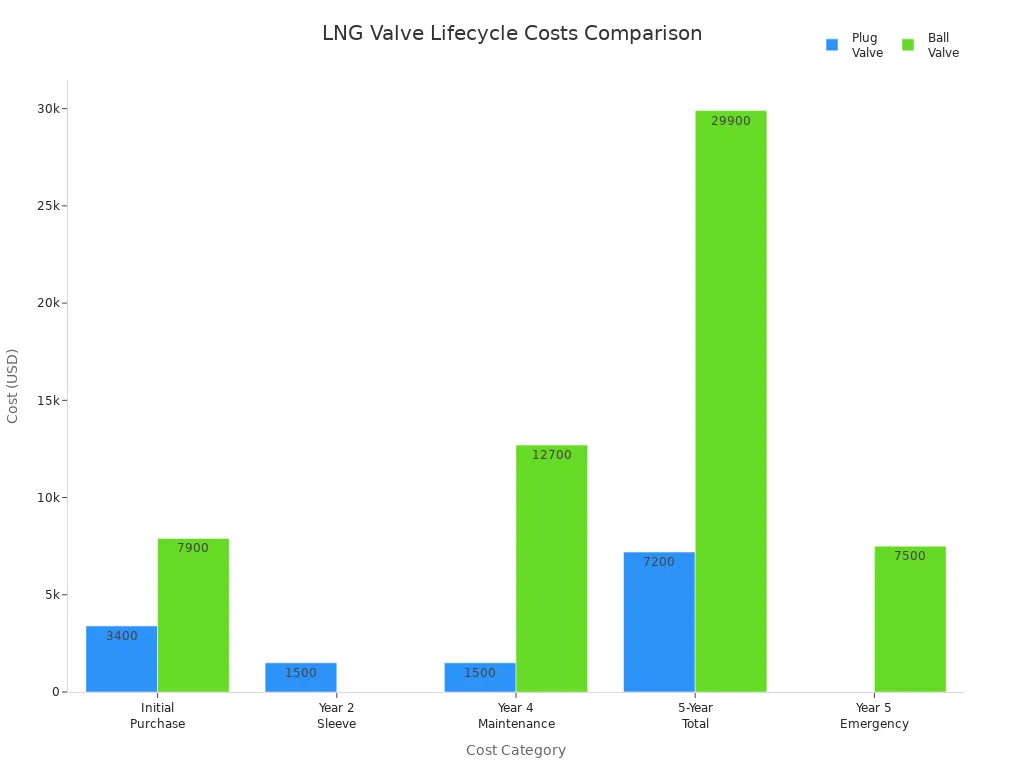
When you choose LNG valves, you need to look beyond the price tag. The initial cost is only part of the story. Some valves cost less to buy but need more repairs later. Others cost more at first but save you money over time.
Here is a table that compares the costs of plug valves and ball valves over five years:
| Cost Category | Plug Valve | 볼 밸브 |
|---|---|---|
| Initial Purchase + Actuator | $3,400 | $7,900 |
| Year 2 Sleeve Replacement | $1,500 | 해당 없음 |
| Year 4 Maintenance | $1,500 | $12,700 |
| Year 5 Emergency Repair | 해당 없음 | $7,500 |
| 5-Year Total | $7,200 | $29,900 |
You can see that plug valves cost less over five years. Ball valves may need expensive repairs and maintenance. The chart below shows this difference clearly:
팁: Always check the total cost over the valve’s life, not just the price you pay at the start.
Maintenance and Replacement
Regular maintenance keeps your LNG valves working well. You should clean, lubricate, and inspect your valves often. This helps you find problems before they cause failures. When you fix small issues early, you avoid big breakdowns and save money.
- Regular maintenance helps you spot and fix issues before they lead to valve failure.
- Cleaning, lubrication, and inspection keep valves in good shape.
- Early repairs make valves last longer and work better.
- You spend less on emergency repairs and replacements.
If you skip maintenance, valves can break down. This can stop your system and cost a lot to fix. You should plan for regular checks and keep records of all work done. This way, your LNG system stays safe and reliable. See our 유지보수 가이드.
메모: Good maintenance means fewer surprises and a longer life for your valves.
Installation & Maintenance Best Practices
Proper Installation Steps
You need to follow the right steps when you install LNG valves. Good installation helps your valves last longer and work safely. Here is a simple checklist you can use:
- Inspect the Valve: Check for damage before you start. Make sure all parts are clean and dry.
- Read the Manual: Look at the instructions from the valve maker. Each valve may have special needs.
- Check Alignment: Line up the valve with the pipes. Bad alignment can cause leaks or stress.
- Use the Right Tools: Tighten bolts with the correct torque. Do not use too much force.
- Install Gaskets: Place gaskets between the valve and pipe flanges. This helps stop leaks.
- Position the Valve: Keep the stem upright or at a small angle. This keeps cold liquid away from the bonnet.
- Test for Leaks: After you install, test the valve with air or nitrogen. Make sure there are no leaks.
팁: Always wear safety gear like gloves and goggles when you install LNG valves. Safety comes first.
Routine Inspection
You should check your LNG valves often. Regular checks help you find problems early. This keeps your system safe and saves money.
- 육안 검사: Look for rust, cracks, or leaks. Check the seals and bolts.
- Function Test: Open and close the valve. Make sure it moves smoothly.
- Seal Check: Listen for hissing sounds. These can mean a leak.
- Lubrication: Add grease to moving parts if needed. This helps the valve work better.
- Record Keeping: Write down what you find. Keep a log for each valve.
| Inspection Task | How Often | What to Look For |
|---|---|---|
| Visual Check | Every month | Rust, cracks, leaks |
| Function Test | Every quarter | Smooth movement |
| Seal Inspection | Every quarter | Hissing, loose seals |
| Lubrication | As needed | Dry or stiff parts |
메모: If you find a problem, fix it right away. Quick action stops bigger issues later.
Common Mistakes in LNG Valve Selection
Overlooking Environment or Standards
Not all valves work the same way. The place you use them matters a lot. LNG Valves face cold, salty air, and shaking. If you forget these things, leaks can happen. Valves can break down too. Many people do not check if the valve meets new rules. In 2026, rules like API Specification 6D and ISO 15848 are strict. If you skip these checks, you might get fined. You could even have to shut down your system.
팁: Always pick a valve that fits your weather. Make sure it follows every safety rule.
Here are mistakes you should not make:
- Picking the wrong valve for your system. For example, using a ball valve when you need careful flow control can cause trouble.
- Choosing materials that cannot handle cold or pressure. This can make cracks and leaks.
- Not checking the pressure range or overload limits. If the valve is too small or weak, it can break and be unsafe.
| Mistake | What Happens Next |
|---|---|
| Wrong Valve Type | Bad flow control, not efficient |
| Bad Material Selection | Wears out fast, leaks |
| Ignoring Standards | Legal problems, shutdowns |
| Incorrect Sizing | Safety risks, system breaks |
Ignoring Maintenance Needs
Some people only look at price when buying valves. But taking care of valves is just as important. If you do not plan regular checks, small problems can get worse. Many people forget about how much repairs cost over time. A cheap valve might need costly fixes later.
Checking and cleaning valves often helps them last longer and work better.
- Not thinking about maintenance can cost more later.
- Skipping checks lets rust, cracks, or leaks go unnoticed.
- Not keeping records makes it hard to find problems or guess when valves will fail.
You should make a plan for inspections and keep notes for each valve. This helps you find issues early and avoid emergency repairs. Good planning saves money and keeps your LNG system safe.
You should think about safety, cryogenic design, and what the valve is made of when picking LNG valves in 2026. Always make sure the valves follow the newest rules. Experts say you should do these things to pick good valves:
- Check and fix your valves on a schedule.
- Do what the maker’s instructions say.
- Watch how well the valve works.
- Teach your team how to take care of LNG valves.
Choose materials that do not rust. Make sure the valve type fits your system. Look at the rules often and talk to valve experts to get the best results.
자주 묻는 질문
What is the best material for LNG valves?
Pick austenitic stainless steel or nickel alloys. These materials stay strong in very cold places. They do not rust easily. This helps your valves last longer. It also keeps them working safely.
How often should you inspect LNG valves?
Check your LNG valves once a month. Look for leaks, rust, or cracks. Regular checks help you find problems early. This keeps your system safe.
Do you need automated actuators for LNG valves?
Automated actuators make your system safer and faster. You can control valves from far away. Manual actuators cost less money. But someone must be there to use them.
What standards must LNG valves meet in 2026?
Your valves must meet API Specification 6D and ISO 15848. These rules make sure your valves are safe. They also check for leaks. Always ask for certificates before you buy.
Can you use regular valves for LNG service?
Do not use regular valves for LNG. LNG valves have special designs for very cold jobs. Regular valves can crack or leak when it gets cold.

