


You use flange connections to join pipes and parts in many piping systems. These connections make strong joints that can handle high pressure and heat. You can put these joints together or take them apart fast, so fixing things is easier. Flange connections also help you deal with changes in the system, like when it gets bigger or smaller. Many engineers and workers pick this way because it lets them make flexible designs and keeps things working well.

Key Takeaways
- Flange connections make pipes and equipment join tightly. They stop leaks and make fixing things easier.
- Standardized flanges let parts from many brands fit together. This makes the system safer and more dependable.
- You must put flange connections together the right way. Clean the surfaces and use the correct gaskets. This stops leaks and keeps the system working well.
- There are different flange types, like weld neck and slip-on. Each type is used for certain pressure or repair needs. This lets people pick the best design.
- Checking and fixing flange connections often is important. It helps find leaks early and keeps piping systems safe and working well.
Flange Connections Overview
What Are Flange Connections
Flange connections join pipes, valves, pumps, and other equipment. They work like strong links that keep everything together. Flange connections help stop leaks, even with high pressure or heat. You can take these joints apart to check or fix things. You do not need to cut the pipes. This makes your job quicker and safer.
Tip: Flange connections use international standards like ANSI. These standards make sure parts from different companies fit together. This helps you build safe and reliable piping systems.
Here is a table that shows what flange connections do in industrial piping systems:
| Function | Description |
|---|---|
| Leak-Proof Seals | Stop leaks in fluid or gas systems. |
| Mechanical Strength | Give strength to the piping network. |
| Maintenance Access | Let you take pipes apart without breaking them. |
| Versatility | Connect different materials or end a line. |
| Standardization | Make sure parts from different makers work together. |
Key Parts of a Flange Connection
A flange connection has many important parts. Each part does a special job:
- Inside Diameter (ID): Matches the pipe’s outside for smooth flow.
- Outside Diameter (OD): Measures how wide the flange is.
- Thickness (T): Shows how thick the flange is.
- Hub Diameter (HD): Connects the hub to the pipe if there is one.
- Raised Face Diameter (RFD): Gives a sealing surface for the gasket.
- Bolt Circle Diameter (BCD): Shows where the bolt holes go in a circle.
- Bolt Holes (BH): Let you fasten the flange with bolts.
- Chamfer/Bevel: Makes it easier to install with a sloped edge.
- Radius or Counterbore: Adds special features for some flange types.
You need all these parts to make a strong and leak-proof joint. When you pick flange connections, always check the parts match the pipe and follow the right standards. For detailed material specs, visit our material download page.
Assembly & Function
How Flange Connections Are Assembled
You must follow certain steps to put together flange connections. These steps help you make a safe and strong joint.
- Look at the flanges and parts. Check for cracks or rust. Make sure the sealing surfaces are flat.
- Clean the flange faces well. Wipe off oil, dust, and dirt so leaks do not happen.
- Pick the right gasket. It should match the pressure, temperature, and fluid.
- Line up the flanges. Both flanges need to be straight and even to stop stress.
- Put in the bolts and add lubricant. Use bolts that fit and grease them for even pressure.
- Tighten the bolts by hand first. Use a crisscross pattern to keep flanges lined up.
- Use a torque wrench to tighten bolts. Do this slowly and in steps for a good seal.
- Check everything and retighten if needed. Make sure the pressure is even on all sides.
Note: You should use flange alignment tools, bolt torque wrenches, and flange spreaders when you put flanges together. These tools help you line up the flanges, tighten bolts the right way, and pull flanges apart for repairs. Using the right tools saves time and helps stop leaks.
The American Society of Mechanical Engineers (ASME) says that bad flange assembly causes about 20% of leaks in piping systems. You can stop these leaks by following each step and using the right tools.

Sealing and Strength Mechanisms
You get a leak-proof seal in flange connections by using strong materials and careful assembly. Most flanges are made from stainless steel or other tough metals. These metals can handle high pressure and do not rust easily. The flange faces must be clean and have no scratches or old gasket pieces. Any flaw can make the pressure uneven and cause leaks.
You need to use the right force when you tighten bolts. Too much force can break the gasket. Too little force can make the joint leak. Always use a torque wrench that is set right and tighten bolts in a cross pattern. This spreads the pressure and keeps the gasket tight between the flanges.
Flange connections give your piping system strength. The bolts hold the flanges together tightly. The gasket fills small spaces and stops fluid or gas from leaking out. When you follow these steps, you make a joint that stays strong and does not leak, even when the pressure is high.
Types of Flange Connections
Weld Neck Flange
You pick weld neck flanges when you want a strong joint. This flange has a long hub that you weld to the pipe. The shape helps lower stress at the base. Weld neck flanges are used where pressure or heat is high.
Key Features:
- High mechanical strength and integrity
- Reduced stress concentration
- Excellent flow characteristics
- Leak-resistant, reliable seal
- Enhanced performance under vibration and fatigue
- Long service life
Where You Use Weld Neck Flanges:
- Oil and gas pipelines, especially offshore and subsea
- Refineries and petrochemical plants
- Power generation, including steam lines and boilers
- Chemical processing plants
- Cryogenic systems
- Shipbuilding and marine fuel systems
Tip: Weld neck flanges are good for tough jobs. You can check and test the joint easily.
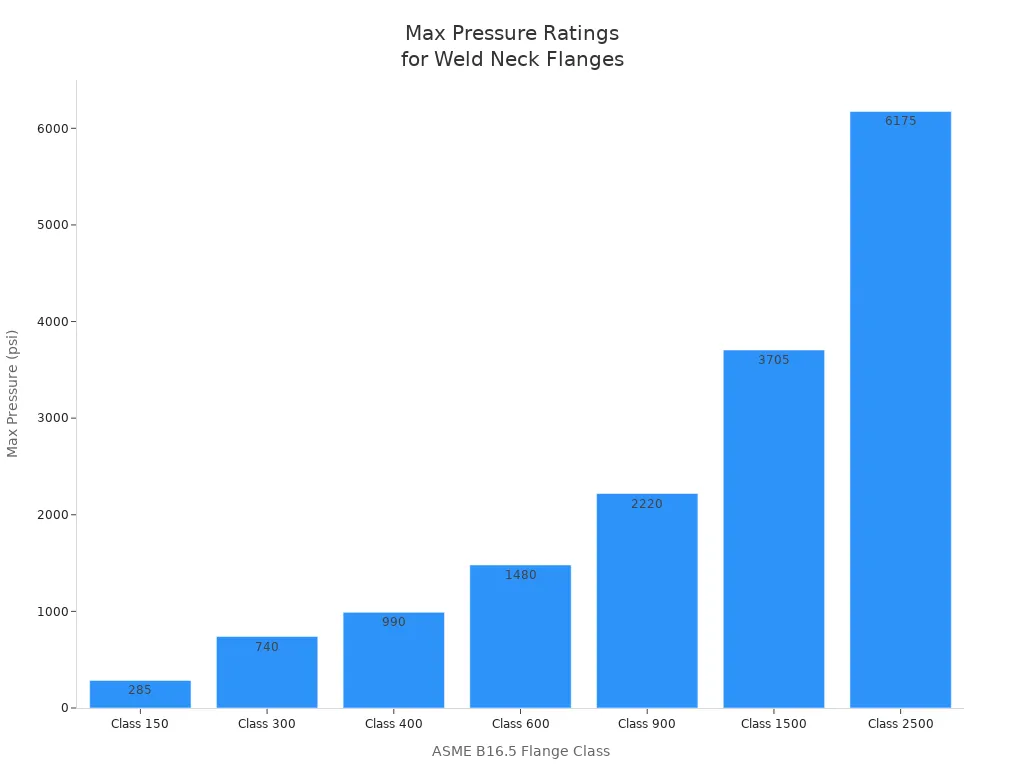
Pressure Ratings (ASME B16.5):
| Flange Class | Max Pressure (at 100°F) |
|---|---|
| Class 150 | 285 psi |
| Class 300 | 740 psi |
| Class 400 | 990 psi |
| Class 600 | 1,480 psi |
| Class 900 | 2,220 psi |
| Class 1500 | 3,705 psi |
| Class 2500 | 6,175 psi |
Slip-On Flange
Slip-on flanges slide over the pipe and need welding on both sides. You use them when you want easy setup and lining up. Slip-on flanges work best in low or medium pressure systems.
Common Uses:
- Water and wastewater systems
- Industrial piping in chemical and refinery plants
- HVAC and chilled water circuits
- Fire protection systems
- Marine and offshore water lines
- Food, beverage, and pharmaceutical lines
- Irrigation and agricultural pipelines
Comparison Table:
| Feature | Slip-On Flanges | Weld Neck Flanges |
|---|---|---|
| Installation | Easier and quicker | Needs precise welding |
| Strength | Lower | Higher |
| Best For | Low-pressure systems | High-pressure, critical systems |
| Cost | More cost-effective | Higher due to material and labor |
Note: Slip-on flanges seal well and hold pressure. They are not as strong as weld neck flanges.
Socket Weld Flange
Socket weld flanges have a socket for the pipe to fit in before welding. You use these when you want a strong joint but do not need to take the pipe apart often.
Advantages:
- Strong and reliable connection
- Easy to align and install
- No need for pipe beveling
- Good for small-diameter, high-pressure lines
Limitations:
- Not suitable for frequent disassembly
- Can trap fluids, which may cause corrosion
- Not ideal for very high-pressure or corrosive systems
Where You Use Socket Weld Flanges:
| Industry | Application |
|---|---|
| Chemical Processing | High-pressure piping |
| Petrochemical Refining | Robust connections |
| Oil and Gas | Pipe-to-valve and fitting connections |
| Power Generation | High-pressure, high-temperature systems |
| Water and Wastewater Treatment | Various piping systems |
| Pharmaceutical Industries | Critical, reliable connections |
| Shipbuilding and Marine | Marine piping systems |
Lap Joint Flange
Lap joint flanges are loose and spin around the pipe. You use them with a stub end that touches the fluid. This makes it easy to line up and fix the pipes.
Key Characteristics:
| Characteristic | Description |
|---|---|
| Loose Flange | Easy alignment and adjustment |
| Corrosion Resistance | Use with corrosion-resistant stub ends |
| Frequent Dismantling | Ideal for regular maintenance and inspection |
| Low-Pressure Use | Best for low-pressure systems |
| Temporary Connections | Quick assembly and disassembly |
| Marine Applications | Common in ships and offshore platforms |
Typical Applications:
- Oil and gas systems needing frequent maintenance
- Chemical plants with corrosive fluids
- Water treatment lines
- Food and beverage piping
- Marine and shipbuilding
The lap joint flange can spin, so you can match bolt holes fast. This helps you save time when you put in or fix pipes.
Threaded Flange
Threaded flanges have threads inside that fit the pipe’s threads. You do not need to weld these flanges. You use them where welding is not safe or allowed.
Design Differences:
| Feature | Threaded Flange | Slip-On Flange |
|---|---|---|
| Connection Method | Tapered pipe threads | Slips over pipe, needs welding |
| Pressure Handling | Good for high pressure (small size) | Best for low pressure |
| Welding Requirement | No welding needed | Welding required |
Limitations:
- Usually for small pipes (½ to 4 inches)
- Not suitable for high-pressure or large systems (typically Class 300 and below)
Where You Use Threaded Flanges:
- Small-diameter, low-pressure piping
- Hazardous areas where welding is risky
- Temporary or quick connections
Blind Flange
Blind flanges close the end of a pipe or tank. You use them when you need to block off a section for repairs, tests, or later use.
Primary Functions:
- Sealing ends of piping systems
- Pressure testing
- Temporary closure during repairs
- Isolating pipeline sections
- End caps for tanks and vessels
- Instrumentation and inspection ports
Benefits:
- High sealing ability
- Easy to remove for access
- Strong pressure resistance
Check blind flanges often to find leaks early and keep things safe. These flanges help keep your system safe and easy to fix.
Flange Connections give you many ways to join pipes and parts. You can pick the right type based on pressure, heat, and how often you need to take things apart.
Pros & Cons of Flange Connections
Benefits
There are many good things about using flange connections in piping systems. Here are some main benefits:
- Easy Assembly and Disassembly: You can join or take apart pipes fast. This makes it simple to do repairs or checks. You do not need to cut the pipe.
- Standardization and Interchangeability: Flanges use worldwide rules. You can use parts from different brands. They will still fit together well.
- Reliable Sealing and Leak Prevention: If you install flanges right, you get a tight seal. This stops leaks, even when pressure is high.
- Support for High Pressure and Temperature: Flanges can be made from strong metals. These work well in hot or high-pressure places.
- Modularity and Design Flexibility: Flanges let you swap out parts easily. You do not have to change the whole system.
Flange connections also make repairs easy. You can take out one part to clean or fix it. The rest of the system stays in place. This saves time and helps keep workers safe.
Tip: Flange joints work well with shaking and temperature changes. Special gaskets keep the seal tight, even if things get hot or cold.
Limitations
There are some problems you should know before picking flange connections:
- Loose joints might leak.
- Seals can fail if the weather changes a lot.
- Rust can happen if air and water touch the flange.
- The surface can wear down and cause leaks.
- If parts do not line up, sealing is harder.
- A crooked flange face can make leaks.
- Scratches or dents on the seal area lower performance.
- If the gasket is not in the center, the seal is weaker.
When to Use Flange Connections
Use flange connections when you need to take pipes apart for repairs, checks, or upgrades. They are best for equipment that needs regular looking after or swapping out. Flanges are also good for high-pressure or hot systems. You can use them where there is shaking or heat changes.
Industry rules say you must pick the right flange for the job. Think about the material, pressure, and what you need it to do. Always match the flange type to your system for safety and good results.
You now know that Flange Connections link pipes and equipment in many systems. Each kind works best for different pressure, heat, and repair needs. When you pick a flange, think about the face type, material, size, and pressure class. Clean all the parts well and use the right tools to make a strong seal. Always check ASME or AWWA rules and talk to experts for your project. For more assistance, contact us today.

FAQ
What is the main purpose of a flange connection?
You use a flange connection to join pipes or equipment. This connection gives you a strong joint. It also lets you take things apart for repairs or checks.
How do you prevent leaks in flange connections?
You must clean the flange faces. You pick the right gasket. You tighten the bolts in a crisscross pattern. This helps you get a tight seal. Learn more about our inspection and testing.
Can you reuse a gasket when reassembling a flange?
You should not reuse a gasket. A used gasket may not seal well. Always use a new gasket for the best leak protection.
Which tools help you assemble flange connections?
You use a torque wrench to tighten bolts. You use alignment tools to line up flanges. Flange spreaders help you pull flanges apart safely.
When should you choose a blind flange?
You pick a blind flange when you need to close the end of a pipe or vessel. This lets you block flow for repairs, tests, or future use.

