


You see DN and PN on valve labels. DN means nominal diameter. It helps you know the size of pipes, flanges, and valves that go together. PN shows the highest pressure the valve and its joints can take. This is measured in bars. DN and PN help you pick the right valve for your system. They also keep everything safe and working well.
These ratings make sure valves work right and fit with other piping parts in factories.

DN and PN Basics
What is DN?
You see DN on valves and pipes. DN stands for Diameter Nominal. This is a code that helps you know the size of a pipe or valve. The letters “DN” come before a number, like DN50 or DN100. The number does not show the exact measurement. It is a reference that helps you match pipes, valves, and fittings. You use DN to find parts that fit together in your system. DN is used all over the world, so you can compare sizes easily.
Tip: DN numbers make it simple to choose the right valve size, even if you do not know the exact diameter.
What is PN?
PN stands for Pressure Nominal. You use PN to know how much pressure a valve or pipe can handle. PN is a number that shows the highest pressure the part can take at a certain temperature. You see PN on flanges, valves, and pipes. For example, PN10 means the part can handle up to 10 bars of pressure. PN is based on how strong the part is and how it was made.
- PN tells you the maximum pressure at a set temperature.
- You see PN before the pressure rating on flanges and valves.
- PN shows both the design and working pressure, following standards.
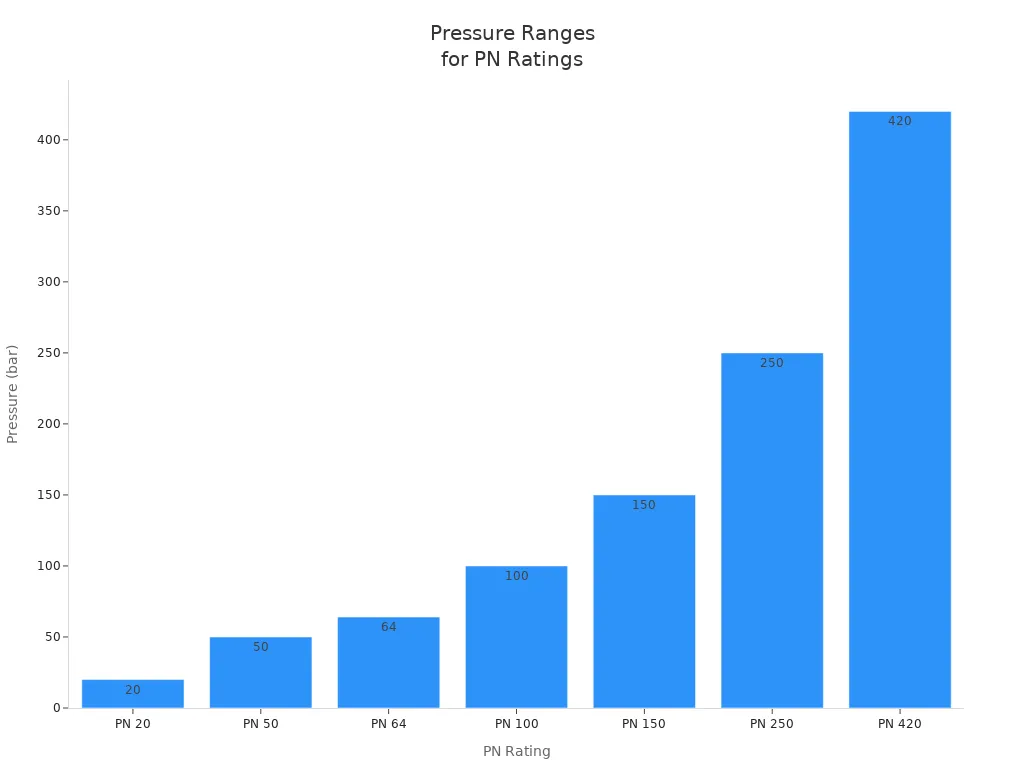
Here is a table that shows common PN ratings and how they match with ANSI classes:
| PN Rating | Pressure (bar) | Equivalent ANSI Class |
|---|---|---|
| PN 20 | 20 | CL 150 |
| PN 50 | 50 | CL 300 |
| PN 64 | 64 | CL 400 |
| PN 100 | 100 | CL 600 |
| PN 150 | 150 | CL 900 |
| PN 250 | 250 | CL 1500 |
| PN 420 | 420 | CL 2500 |
Why DN and PN Matter
You need to look at DN and PN when you pick valves for your system. DN helps you match the size of pipes and valves. PN helps you make sure the valve can handle the pressure in your system. If you choose the wrong DN and PN, you can have leaks or even explosions. Equipment can fail, and you may face costly downtime.
- Leaks can happen if DN and PN do not match your system.
- Pressure surges can cause explosions if PN is too low.
- Equipment may break, leading to safety problems and lost time.
When you use DN and PN together, you make your system safe and reliable. DN shows the size you need. PN shows the pressure the valve can take. You keep your system working well and protect people and equipment.
Note: Always check both DN and PN before you install a valve. This helps you avoid mistakes and keeps your system safe.
DN Sizing Standards
DN and Pipe Size
When you see DN, it is a number that helps match pipes and valves. DN means “Diameter Nominal.” This number usually matches the inside size of a pipe, mostly for thin pipes. The real inside size can change because pipe walls can be thick or thin. Pipe schedules or pressure classes decide how thick the pipe wall is. Companies use standards to keep pipe sizes the same. You should check both DN and the real outside size to make sure parts fit and seal well. This stops leaks and keeps your system safe.
Tip: Always measure the real pipe size before you put it in. This helps you avoid problems when connecting or changing pipes.
Common DN Values
Some DN sizes are used a lot in factories and buildings. These sizes fit what different systems need. Here is a table that shows common DN sizes and where you use them:
| Application | Typical DN Size | Notes |
|---|---|---|
| Beverage dispensing, small dosing | DN15 | Low flow, precise control |
| Industrial water supply, chemical lines | DN25 | Higher flow, common standard |
| Factory air distribution | DN15–DN40 | Depends on equipment demand |
| HVAC chilled water | DN25–DN50 | Balances pressure & flow |
| High-capacity pumps | DN50 and above | Ensures stable delivery |
You can see DN15 and DN25 are used a lot. Bigger DN sizes like DN50 are good for pumps and large water pipes.
International DN Standards

It is important to know DN standards when you use valves from other countries. Groups like ISO and ANSI use different ways to measure and have their own rules. Here is a table that shows how they are different:
| Organization | Measurement Units | Standards Used |
|---|---|---|
| ISO | Metric (cm, m) | EN10253, EN 1092 |
| ANSI | Imperial (inches) | ASME B16.9, ASME B16.5 |
Many rules help you match DN sizes and make sure valves fit. Some important rules are:
| Standard | Description |
|---|---|
| ISO 5752 | Converts DN and NPS for compatibility |
| DIN EN 558 | Specifies valve dimensions for interchangeability |
| DIN EN 1092-1 | Defines flange sizes for secure connections |
| ANSI B16.34 | Covers valve design and construction |
| BS 5150 | Sets requirements for cast iron gate valves |
International rules make it easier to use valves from different places. They help keep your system safe, work well, and easy to fix.
PN Pressure Ratings
PN and Maximum Pressure
PN means nominal pressure. This tells you the highest pressure a valve or flange can safely take. You see PN numbers in bars, like PN10 or PN40. Rules like ASME B16.5 help set these numbers for different valves. When you look at a valve, the PN number shows if it is safe for your system’s pressure. Flange pressure ratings also tell you the most pressure a flange can take at certain temperatures. This helps keep your system safe.
- PN numbers match pressure classes, so you can compare valves and flanges easily.
- You find these numbers on labels and in technical papers.
| Flange Class | 150 | 300 | 400 | 600 | 900 | 1500 | 2500 |
|---|---|---|---|---|---|---|---|
| PN (bar) | 20 | 50 | 68 | 100 | 150 | 250 | 420 |
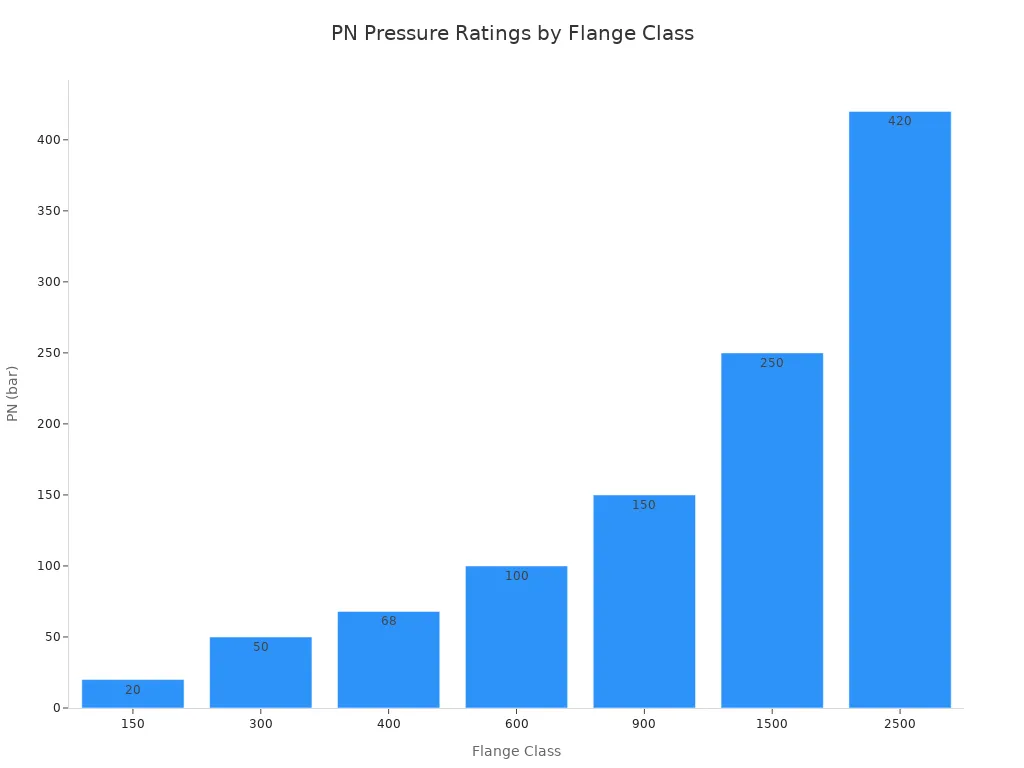
If you go over the pressure rating, the valve can leak, bend, or even break. This can be very dangerous.
Material and Temperature Effects
The material and temperature both change a valve’s PN number. You need to check what the valve is made of and how hot or cold your system gets. Stronger materials like carbon steel can take more pressure and work in more temperatures. Stainless steel works with acids but cannot take as much pressure. High heat can make a valve weaker. The thickness of the valve parts also helps keep things safe.
- The PN number helps you pick the right material, like steel or copper.
- Changes in temperature can make a valve stronger or weaker.
| Material | Suitable For | PN Rating | Temperature Range |
|---|---|---|---|
| Carbon Steel | Water, steam, air, hydrogen, ammonia, nitrogen, petroleum | PN ≤ 32.0MPa | -30 ℃ ~ 425 ℃ |
| High Temperature Copper | Steam and petroleum products | PN ≤ 17.0MPa | Below 570 ℃ |
| Stainless Acid Resistant Steel | Nitric acid and acetic acid medium | PN ≤ 6.4MPa | ≤ 200 ℃ |
Typical PN Ratings
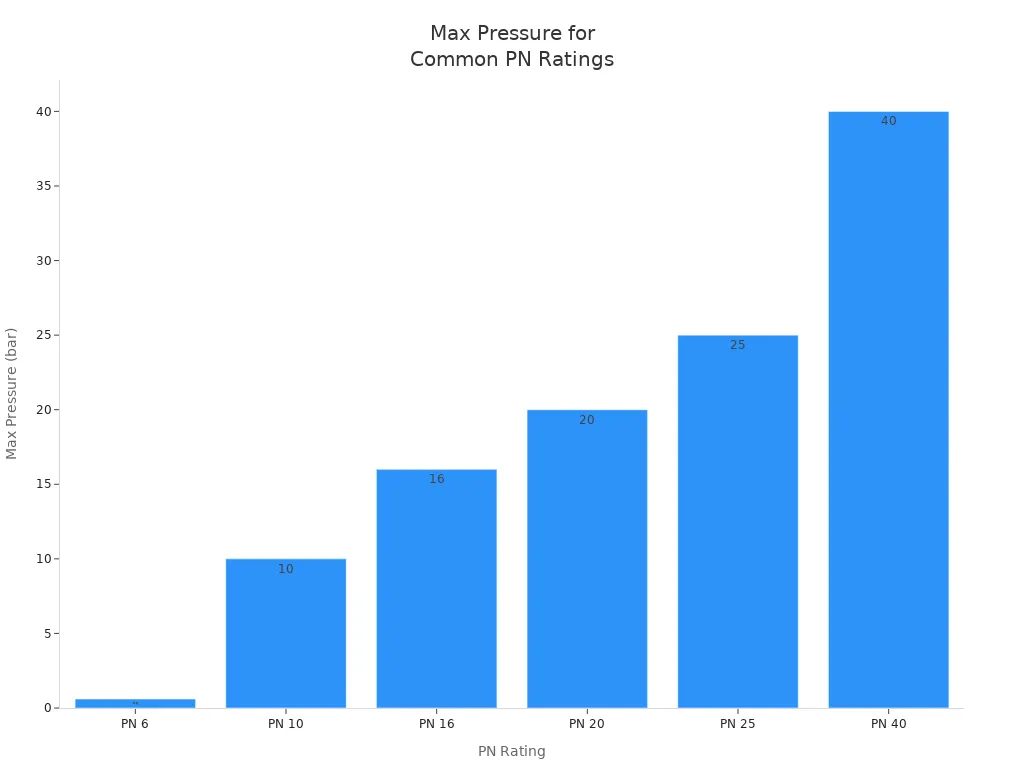
You see many PN numbers in factories and buildings. Each number fits a different job. For example, PN6 is good for low-pressure air pipes. PN40 is used for high-pressure steam. You should always match the PN number to what your system needs.
| PN Rating | Maximum Pressure (bar) | Common Applications |
|---|---|---|
| PN 6 | 0.6 | Compressed air lines, gas pipes, garden hoses |
| PN 10 | 10 | Water distribution systems, air supply lines, medium-pressure applications |
| PN 16 | 16 | Industrial process lines, water supply systems, HVAC systems |
| PN 20 | 20 | Industrial piping systems, chemical processing, oil and gas transmission |
| PN 25 | 25 | Power generation, oil refineries, chemical plants |
| PN 40 | 40 | High-temperature steam systems, nuclear reactors, military industries |
When you pick valves, always check both DN and PN. This helps you avoid mistakes and keeps your system safe.
PN vs. Class Ratings
European PN vs. American Class
You often see two main systems for valve pressure ratings. In Europe, you use PN (Pressure Nominal). In America, you use Class ratings. Both systems help you know how much pressure a valve can handle. PN uses numbers like PN10 or PN40. These numbers show the maximum pressure in bars. Class ratings use numbers like Class 150 or Class 300. These numbers show the pressure in pounds per square inch (psi).
Here is a table that helps you compare the two systems:
| Characteristic | DIN Standard | ANSI Standard |
|---|---|---|
| Pressure Rating System | PN (Pressure Nominal) | Class (150, 300, etc.) |
You need to check which system your project uses. If you work with European valves, you look for PN ratings. If you use American valves, you look for Class ratings. This helps you pick the right valve for your system.
Tip: Always match the rating system to your project location. This helps you avoid mistakes and keeps your system safe.
Conversion and Compatibility
When you work on international projects, you may need to convert between PN and Class ratings. You do this to make sure all parts fit and work together. If you do not check compatibility, you can face problems during assembly.
- You ensure compatibility across regions.
- You prevent mismatched components when you ship valves to different areas.
- You avoid assembly issues and extra costs.
You can use conversion charts to match PN ratings to Class ratings. For example, PN16 is close to Class 150. PN40 matches Class 300. You should always check the pressure and temperature limits before you choose a valve.
If you mix standards, you risk leaks or valve failure. You keep your system safe when you match ratings correctly. You also save time and money during installation.
Note: Always ask your supplier for help if you are not sure about conversion. This helps you avoid costly mistakes.
Selecting Valves by DN and PN
Matching DN and PN to Application
You need to match DN and PN to your system for safe and reliable operation. Follow these steps to choose the right valve:
- Start with your system’s needs. Find out the flow, pressure, and temperature. Add a safety margin to your design pressure.
- Check the manufacturer’s charts. Look at how pressure and temperature affect the valve’s rating. Remember, the PN number is a guide, not a promise for every condition.
- Pick a PN rating higher than your normal pressure. This helps the valve handle pressure spikes or sudden changes.
- Make sure the valve’s material fits your fluid and temperature. Some materials work better with certain chemicals or heat.
- Match the DN size to your pipes and fittings. This keeps the flow steady and avoids leaks.
- Ask your supplier for help if your system is special. They can suggest the best valve for tough jobs.
Tip: Always check both DN and PN before you buy or install a valve. This keeps your system safe and working well.
Common Selection Mistakes
Many people make mistakes when picking valves. Watch out for these common errors:
- Choosing a valve with a PN rating too close to your system’s pressure. This leaves no room for pressure surges.
- Ignoring the real pipe size and only looking at the DN number. This can cause leaks or poor flow.
- Forgetting to check if the valve material matches your fluid or temperature.
- Mixing valves and pipes from different standards without checking if they fit together.
Note: Double-check all ratings and sizes before you order. This saves time and money.
Valve Selection Checklist
Use this checklist to make sure you pick the right valve for your job:
| Category | Details |
|---|---|
| Pressure and Temperature Ratings | Check Class (ASME) and PN (DIN) ratings; avoid overloading valves. |
| End Connections & Pipeline Size | Match valve ends (flanged, threaded, welded, wafer) and DN to pipe size. |
| Industry Standards & Certifications | Look for API, ISO, ASME, CE, or FDA-approved valves if needed. |
✅ Review this checklist before every valve purchase to avoid costly mistakes.
You now understand why valve size and pressure ratings matter. When you select a valve, always check both the diameter and the pressure rating. This helps you keep your system safe and reliable. Use what you learned when you choose valves for any project. If you face a complex or high-risk job, ask an expert for advice. Careful choices protect your equipment and everyone around you.
FAQ
What does DN mean on a valve label?
DN stands for Diameter Nominal. You use DN to find the size of a valve or pipe. The number after DN helps you match parts that fit together in your system.
How do you choose the right PN rating?
You check your system’s pressure. Pick a PN rating higher than your normal pressure. This helps your valve handle pressure spikes and keeps your system safe.
Can you mix DN and PN standards from different countries?
You should not mix standards without checking compatibility. Use conversion charts or ask your supplier for help. This prevents leaks and makes sure your valves fit and work well.
Does temperature affect PN ratings?
Yes, temperature changes how much pressure a valve can handle. High heat can lower the PN rating. Always check the valve’s material and temperature limits before you install it.
What happens if you pick the wrong DN or PN?
You risk leaks, equipment damage, or safety problems. Always match DN and PN to your system’s needs. Double-check sizes and ratings before you buy or install a valve.

