


You use Flange Pressure Ratings to know how much pressure a flange can safely handle in a 판막 or piping system. These ratings help you choose the right parts so the system works well and stays safe. If you pick a flange with a rating too low for your system, leaks or failures can happen. Pressure classes show you the limits for both pressure and temperature. You protect your equipment and people when you match the correct rating to your needs.

핵심 요약
- Flange Pressure Ratings show how much pressure a flange can hold. You must pick a flange with the right rating for your system. This helps stop leaks and keeps the system from breaking.
- Pressure classes, such as Class 150 or Class 300, tell the most pressure a flange can take at certain temperatures. If the temperature goes up, the pressure rating goes down. Always look at both the pressure and temperature.
- Pick the correct materials for your flanges. Materials like carbon steel and stainless steel act differently under pressure and heat. Each one has its own good and bad points.
- Check flange connections often. Look for rust, leaks, and make sure bolts are tight every few months. This keeps your system safe.
- Use industry standards like ASME B16.5 when you pick flanges. These rules help keep your piping systems safe and working well.
Flange Pressure Ratings Overview
What Are Flange Pressure Ratings
You use Flange Pressure Ratings to know how much pressure a flange can handle in your piping or valve system. These ratings tell you the safe limits for pressure and temperature. Each rating matches a specific class, such as Class 150 or Class 300. You find these classes in major engineering standards like ASME B16.5 and ASME B16.47. These standards help you pick the right flange for your job.
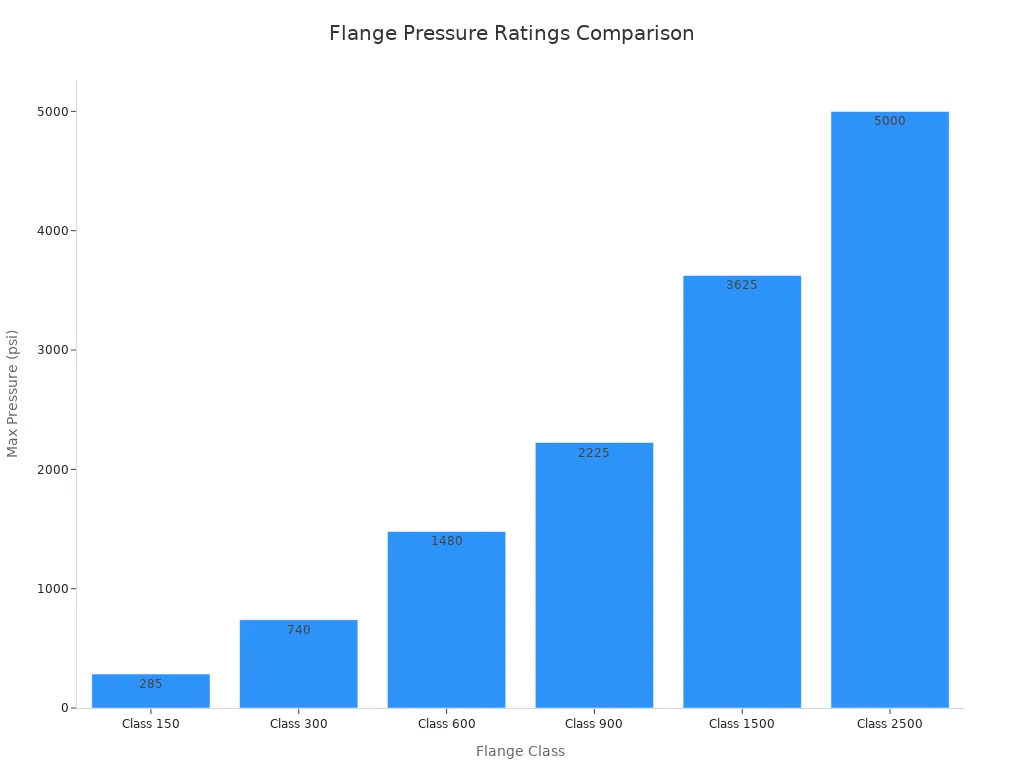
Here is a table showing the most common flange classes and their maximum pressure:
| 플랜지 클래스 | Maximum Pressure (psi) |
|---|---|
| Class 150 | 285 |
| Class 300 | 740 |
| Class 600 | 1480 |
| Class 900 | 2225 |
| Class 1500 | 3625 |
| Class 2500 | 5000 |
You can also see the differences in pressure ratings in this chart:
Why Pressure Ratings Matter
You need to match the Flange Pressure Ratings to your system’s needs. If you choose a flange with a rating that is too low, leaks or failures can happen. This can put your equipment and people at risk. Flange classes are set by standards and depend on the material, size, and temperature. For example, a Class 125 flange can handle 125 PSI at 353°F, but it can handle more pressure at lower temperatures.
팁: Always check the pressure and temperature limits before you select a flange. This helps you keep your system safe and reliable. For high-pressure needs, consider our high pressure ball valves.
You protect your system by following these ratings. You also make sure your piping and valves work well for a long time.
Flange Pressure Ratings Standards
ASME B16.5 Pressure Classes
You see ASME B16.5 pressure classes in many piping systems. These classes show the highest pressure a flange can take at a set temperature. You will notice classes like 150, 300, 400, 600, 900, 1500, and 2500. Each class gives your system extra safety. When you pick a pressure class, look at the highest pressure and temperature your system will have. You also need to think about the material and how it deals with corrosion.
- Match the pressure class to what your system needs.
- The highest pressure and temperature decide the class you need.
- Engineers check normal and upset conditions to keep things safe.
- The pressure class shows the Maximum Allowable Working Pressure (MAWP) at a set temperature.
- The rating gets lower as the temperature goes up.
메모: Always check both pressure and temperature before picking a flange. This helps your system stay safe and work well.

Series A vs. Series B Flanges
When you use big flanges, you see two main types: Series A and Series B. Series A flanges follow MSS SP-44 rules. Series B flanges follow API 605 rules. You use Series A flanges for new pipes and high-pressure jobs. Series B flanges are good for repairs or less important pipes.
Here is a table to help you compare Series A and Series B flanges:
| 특징 | Series A (MSS SP-44) | Series B (API 605) |
|---|---|---|
| Thickness and Weight | Thicker, heavier, stronger | Lighter, more compact |
| Fasteners | Fewer, larger fasteners | More, smaller fasteners |
| Bolt Circle Diameter | Larger | Smaller |
| Pressure Ratings | Class 150 to 900 | Class 75 to 900 |
| 비용 | More expensive | Less expensive |
| 애플리케이션 | New pipelines, high-pressure | Refurbishment, non-critical |
Series A flanges are stronger and safer for hard jobs. Series B flanges cost less and work for easier tasks.
Pressure-Temperature Relationships
You need to know how pressure and temperature work together when picking Flange Pressure Ratings. The rating tells you the most pressure a flange can take at a certain temperature. If the temperature goes up, the pressure rating goes down. This keeps your system safe and stops problems.
- Flange pressure ratings show safe pressure at set temperatures.
- Higher temperatures mean lower pressure ratings.
- Always check both pressure and temperature for each job.
팁: Always use pressure-temperature charts from standards like ASME B16.5. This helps you choose the right flange and keeps your system safe.
You see these rules in 석유 및 가스, water, and chemical systems. You must follow standards and check ratings to stop leaks and keep your system working for a long time.
Determining Flange Pressure Ratings
Factors Affecting Ratings
You need to think about many things when you figure out flange pressure ratings for your piping system. Each thing helps you know if a flange will work safely.
- Application Standards: You must use standards like ASME B16.5 or B16.47. These standards give tables for pressure and temperature for each flange class.
- Materials: The flange material changes how much pressure it can take. Carbon steel, stainless steel, and nickel alloys have different strengths. You pick the material based on temperature, pressure, and the fluid in the pipes.
- Operating Medium: The fluid in your system matters. If you use dangerous or corrosive fluids, you may need a higher pressure rating.
- Medium Temperature and Additional Forces: High temperatures lower the pressure rating. Extra forces like bending, shaking, or outside loads also affect how the flange works. You must add these forces to your math to make sure the flange does not break.
팁: Always check every thing before you pick a flange. This helps you stop leaks and keeps your system safe.
Engineers use the weakest part rule when they figure out flange pressure ratings. This rule means your system’s pressure rating is only as strong as the weakest part, usually the flange connection. You must make sure every part meets or goes above the needed rating.
Large Diameter Considerations
Big flanges need special care in high-pressure systems. You see these flanges in oil and gas, 수처리, and chemical plants. They must handle more stress and bigger loads than small flanges.
| 고려 사항 | 설명 | 장점 |
|---|---|---|
| Enhanced Structural Integrity | Gives strong connections and stops leaks. | Helps prevent big failures. |
| Superior Pressure Handling Capabilities | Made for high-pressure jobs and works well. | Keeps the system working right. |
| Versatility in Material Selection | Comes in many materials for different needs. | Can be changed and fights rust. |
| Ease of Installation and Maintenance | Makes lining up and taking apart easy. | Saves time and money. |
| Compatibility with Industrial Standards | Follows standards for quality and sameness. | Makes buying and swapping easy. |
| Improved Safety Features | Has leak-proof seals and strong bolts for safety. | Lowers the chance of dangerous leaks. |
You must pick big flanges that fit your system’s pressure and safety needs. These flanges often use stronger materials and special shapes to stop leaks and breaks.
Material and Temperature Impact
Material and temperature are very important for flange pressure ratings. Each material acts differently when it gets hot or stressed. For example, carbon steel flanges lose a lot of strength at high temperatures. At 800°F, a carbon steel flange can lose over 70% of its pressure strength compared to room temperature.
- The pressure rating, or class, shows the most pressure a flange can take at a set temperature.
- When temperature goes up, the pressure rating goes down for all materials.
- You must pick a material that fits your system’s pressure and temperature needs.
- Stronger alloys can take more pressure, but every material gets weaker as it gets hotter.
ANSI/ASME B16.5 puts materials into groups and gives pressure-temperature tables. These tables help you pick the right flange for your job. You must always check both the material and the temperature before you choose.
메모: If you use the wrong material or forget about temperature changes, your flange can break. Always use the tables and follow the standards.
Engineers use tools and software to check flange pressure ratings. Some tools are FlangePRO, FlangeRating_B16_5, JADE, and COMPRESS. These tools help you model loads, check stress, and balance flange design for safety.
You must pick the right rating for every part of your system. This keeps your equipment safe and stops accidents. When you follow the standards and use the right tools, you protect your system and everyone who works with it.
Ensuring Joint Integrity
Selecting the Right Flange Rating
You must follow some easy steps to pick the right flange. This helps stop leaks and keeps your system safe. Here is a simple way to do it: First, find out your system’s highest pressure and temperature. Write these numbers down. Next, pick the right material. Carbon steel and stainless steel act differently under pressure. Then, check the standards. Use ASME, ANSI, or DIN charts to help you choose. Think about the environment too. If your system faces rust, heat, or bad weather, you may need a special rating. Last, talk to trusted manufacturers. They can give you good advice for your job.
팁: Always make sure the flange matches your system’s real needs. This keeps your equipment and people safe.

Best Practices for Reliable Connections
You can make flange connections strong and safe by following best practices. The table below shows important steps you should take:
| Best Practice | 설명 |
|---|---|
| 재료 선택 | Check chemical and mechanical properties with test certificates. |
| Gasket Types | Use the right gasket to stop leaks. |
| Installation Practices | Center the gasket and tighten bolts evenly for a good seal. |
| Design Considerations | Pick flanges that lower stress and give smooth pipe transitions. |
| Supplier Quality | Choose suppliers with a good record for quality and delivery. |
You should also remember these habits: Use the right gaskets for high-pressure jobs. Always follow the correct steps when you install flanges. Stick to industry standards for design and materials.
Common Mistakes
You can stop many problems by watching out for common mistakes. Here are some things to remember: Do not skip regular checks. Look for rust, leaks, worn gaskets, and bolt issues. Do not forget about the fluid type. Corrosive fluids need special flange materials. Do not ignore training. Make sure you and your team know the pressure rating standards and how to put flanges together. Do not use the wrong material. Always match the flange to the fluid and the job. Do not forget to keep records. Write down all checks and repairs for every flange.
메모: Regular checks and good training help keep your system safe and working well. Flange Pressure Ratings only protect your system if you use them the right way.
You help keep your piping system safe by picking the right flange pressure ratings. When you follow ANSI and ASME standards, you stop leaks and failures. These rules tell you what materials and sizes to use. They also set pressure limits for each part.
- You make sure all parts fit together.
- You stop dangerous problems and follow safety laws.
- You get your system ready for any changes later.
Checking your system often keeps it strong. Use this checklist to help with maintenance:

| Check Item | Frequency | Action |
|---|---|---|
| Visual Inspection | 계간지 | Look for damage or rust |
| Bolt Tightening | Semi-annual | Check bolts and tighten if needed |
| 씰 무결성 | 계간지 | Change old gaskets or seals |
| Alignment Verification | 계간지 | Fix flange alignment if it is off |
Picking the right parts and checking them often keeps your equipment safe. This also protects everyone who uses the system.
자주 묻는 질문
What does a flange pressure rating mean?
A flange pressure rating shows the most pressure a flange can take safely. You find this number in standards like ASME B16.5. Always look at the rating before picking a flange.
How do you pick the right flange material?
You need to think about your system’s temperature, pressure, and what fluid is inside. Use this table for help:
| 재료 | 가장 적합한 대상 |
|---|---|
| 탄소강 | Water, low heat |
| Stainless | Chemicals, heat |
| Alloy Steel | High pressure |
For more material data, check the 엔지니어링 툴박스.
Why do pressure ratings change with temperature?
When the temperature goes up, the flange material gets weaker. You have to lower the pressure rating to keep things safe.
Always use pressure-temperature charts from standards.
How often should you inspect flange connections?
You should check flange connections every three months. Look for rust, leaks, and bolts that are not tight.
- Check gaskets
- Tighten bolts
- Fix alignment
Can you mix different flange pressure classes?
You should not use flanges with different pressure classes together. If you do, the lowest class is the safe limit.
Always match flange classes for safety.

